
by Samantha Erin, Tower Hamlets Socialist Party
On Saturday 16 May the Palestine Coalition has organised a march in London on the anniversary of the Nakba or catastrophe — violent mass displacement of the Palestinians from their land in 1948. Every year this event is supported and attended by Socialist Party members and thousands of others to show solidarity with displaced Palestinians and to raise the importance of linking their struggles for self-determination with the international working class.
Action on the day of the Together march against the far right
Photo: Dave Reid
This year, Tommy Robinson, the far-right and Islamophobic political activist has arranged a counter-demonstration on the same day.
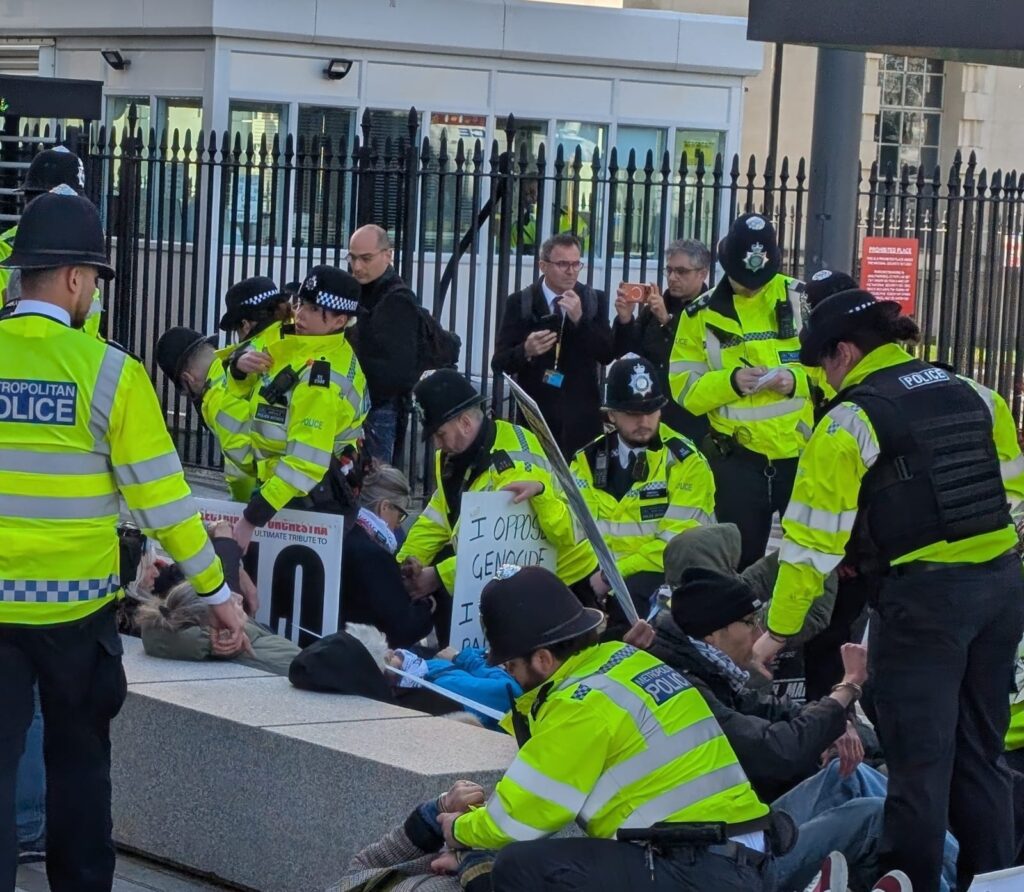
Responding to this situation, the London Metropolitan Police have shown their true colours. They are supporting arrangements for Tommy Robinson’s hate march to go ahead unchallenged and refused the proposed route for the Nakba Day march. Disgracefully, they’ve allocated all of London’s political centre, the whole of Whitehall, Parliament Square and Trafalgar Square, to the far-right protest.
This is not the first time the far-right have tried to push left groups out, and by organising our collective strength we have defeated them. Tower Hamlets in east London is a strongly diverse borough with a high population of Muslim and Bengali residents. We have a strong history of standing with these residents and as residents ourselves, fighting and beating the far right.
On 25 October last year, anti-racists, trade unionists and socialists came together in Tower Hamlets, to organise against Ukip leader Nick Tenconi’s far-right mobilisation, part of Ukip’s “mass deportations tour”. The police banned this demonstration from the borough, in reality to protect the far right from the response of the local community, thousands turned up on the day. However, the ruling for Nakba Day shows the police can in no way be relied on to fight the far right.
Not long before then, on 8 October 2025, the ‘Pink Ladies’ – one of the right-wing groups picketing hotels housing asylum seekers – protested outside Tower Hamlets Town Hall. The council was hearing a motion condemning anti-migrant protests. Again, this was met by a counterprotest, outnumbering the Pink Ladies – and this time led by council workers defending their workplace, through the local branch of their union, Unison.
Organisers of the Nakba Day march are calling on the police to immediately reverse the decision to disrupt the demo, and are preparing to march in central London. Socialist Party members argue that to build the most effective campaign against racism and to strengthen and develop the Palestine solidarity movement, it’s vital that trade unions take the lead. 6.5 million workers are organised in the unions, of all different backgrounds, and with the power to bring society to a halt. A trade union campaign against racist division calling for jobs, homes and services for all could undercut the growing support for the far-right.
Read more on how unions must lead anti-austerity struggle to cut across Reform and the right by searching ‘Together: Hundreds of thousands march against the far right’
On 1 April, Ben Jamal and Chris Nineham of Palestine Solidarity Campaign were found guilty of breaching conditions placed on a protest against the genocidal war on Gaza by the police over a year before.
The police had banned marchers from marching on the BBC, the public broadcaster whose coverage of the war has echoed the interests of the British capitalist establishment and their backing of the Israeli state. The pair were fined £7,500 and are appealing the conviction.
New powers granted to the police by the Tories, and strengthened by Starmer’s Labour have led to increased restrictions on the right to protest. Even though the ban on Palestine Action was found by the High Court to be unlawful, the police have continued to arrest people for showing support for it, as the Labour government is appealing this judgement.
Attacks on our ability to organise and fight back come from a place of weakness. The Keir Starmer government knows how unpopular it is and how shallow its base of support is, and so relies on repressive measures to try and keep a lid on the simmering anger thousands of people have.
An injury to one is an injury to all. Recent court injunctions against striking Birmingham bin workers’ effective picketing show that the laws and courts are not neutral but serve the interests of the bosses.
The trade unions should mobilise and fight for these democratic rights including restrictions on workers’ rights, alongside an end to Labour austerity. They should demand the scrapping of all the anti-trade union laws, including the undemocratic ballot thresholds still on the books despite previous Labour promises.