
by Oscar Parry, Hackney Socialist Party
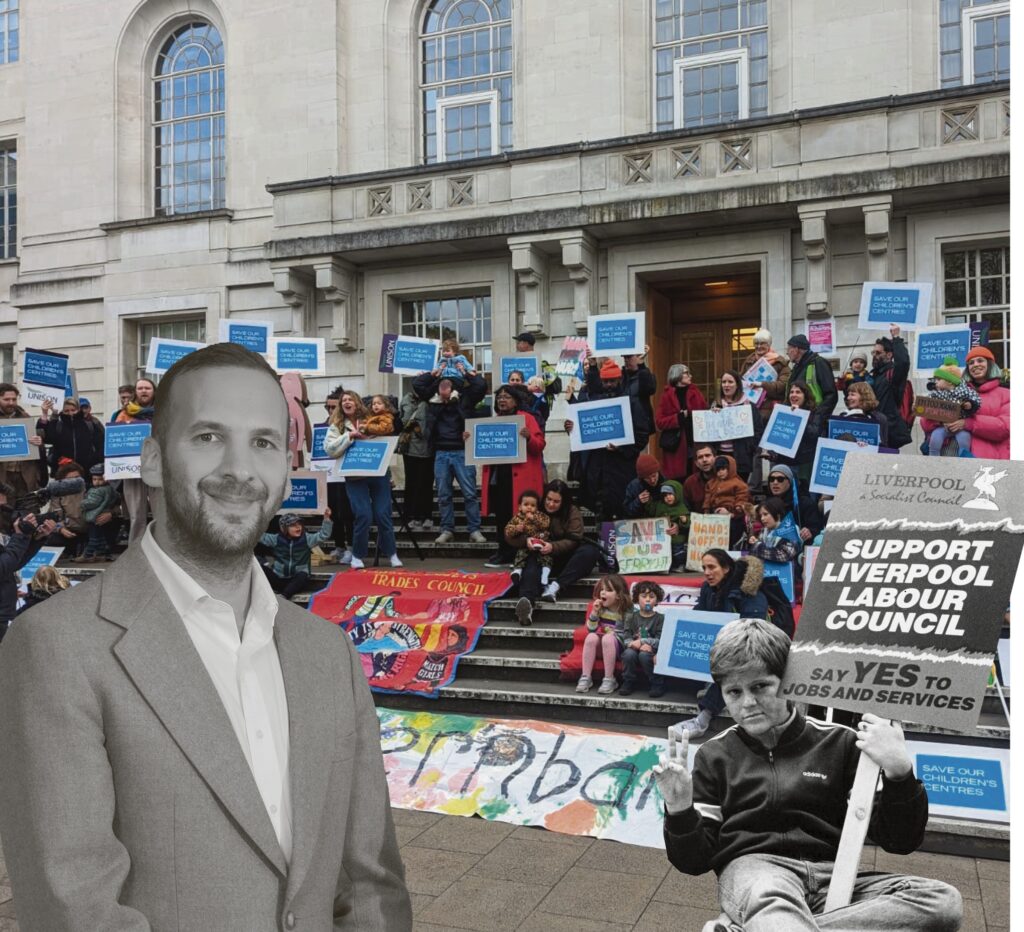
Around 200 people attended the national anti-austerity summit hosted by Hackney’s new Green council on 9 September. From a show of hands, roughly a third of those gathered were councillors.
A late motion to next month’s Green Party conference, backed by Hackney Mayor Zoe Garbett, asks the Green Party nationally to endorse the summit’s opposition to austerity. It declares: “Cuts in local government are not inevitable, but a political choice. We have a duty to resist them and to demand an alternative”. The Greens are “crucial to any anti-austerity movement”, the motion says, and, leading nine councils and part of almost 50 administrations, they could certainly play an important part.
So what strategy is needed to fight the cuts?
Another strongly worded letter?
The summit came out of working-class pressure. In January, trade unionists petitioned Zack Polanski to make every Green candidate pledge to vote against all cuts. Greens Organise, on the party’s left, answered with a pledge signed by 950 candidates, promising an emergency summit rather than a vote against cuts. Many signatories were elected, including the mayors of Hackney and Lewisham.
The Greens Organise candidates’ briefing for the May elections complained that the challenge to governments on austerity had been “limited to a smattering of strongly worded letters from council leaders”. So how is the summit’s strategy substantially different?
The summit agreed five ‘asks’ of Andy Burnham’s government, including restored funding and more council homes, all worth fighting for. But Zoe Garbett summed up the approach as “asks to government, not to each other”: a cross-party coalition including Labour and Lib Dem councillors, as well as trade unionists.
Burnham and Chancellor John Healey are “in lockstep” on the fiscal rules, with no relief from austerity signalled for the 28 October Budget. Without a commitment on what councils will do when Burnham says no, the ‘asks’ risk becoming another strongly worded letter.
Socialist Party member Ali Haydor, from Southampton Trades Council, and other trade unionists from the floor, did have an ‘ask’ of the Green councillors: “Council cuts have been carried out by all parties, including Labour, Lib Dems and Greens. Are you going to pledge to a no-cuts position in the local council budgets next February?”
The ‘case’ against fighting
Under that pressure, Zoe Garbett addressed the no-cuts question: “The only way a no-cuts budget will work is if there’s a critical mass of councils that do it”. Otherwise, “we throw our residents and our services to the commissioners” that, she argued, the government would send in. She has told the Hackney Citizen that Hackney faces a £53 million gap over three years, with “cuts that will have to be made” to avoid letting commissioners sell off the borough’s land and properties.
In the summit, Greens Organise members argued that commissioners would cut harder, that too few councils would yet take a stand, that it would alienate Labour and Lib Dem ‘partners’ and let Labour say ‘Greens can’t organise a council budget’, and that local government unions would not back it, having missed the ballot 50% turnout threshold in this year’s pay dispute. Nationally, Zack Polanski claimed last October that councils setting no-cuts budgets “effectively down tools, and then the government comes in and do all the cuts anyway”.
In place of a fight, different speakers spoke of ‘innovative funding methods’, community banks, and the claim that council debt “on a computer can be deleted”.
What would a real fightback look like?
There are no shortcuts in this fight. Austerity is the deliberate policy of a capitalist class in crisis, determined that working-class people pay while it finds billions for rearmament. Only a mass movement can force the money out of it.
As Hannah Sell has argued in Socialism Today, the starting point would be a clear commitment by Green-led councils to make no more cuts to services, jobs, pay or conditions, and no council tax rises. Far from ‘downing tools’, such a stand would have a seismic effect.
Labour has already retreated under pressure on winter fuel payments, and partly on disability cuts. Burnham became prime minister by partially echoing working-class anger at “hollowed-out” councils. Green councils that harnessed that mood could help build a movement able to defeat this weak government.
Hackney council promises residents a “large engagement process” but if that means asking residents which cuts to make, it becomes the same divisive tactic that Labour uses. Instead, a genuine ‘People’s Budget conference’ of local trade union branches, community groups, young people and residents could draw up a programme to meet the needs of all, and mobilise the working class to fight for it.
Reserves and borrowing powers can be used to legally balance a no-cuts budget while a campaign wins the money back, and the sanction of surcharging councillors was abolished in 2000. Commissioners have been sent into councils that spent years cutting, never one that refused to cut, and this weak government would struggle to justify sending them against councils defending services. The compliant road leads to the sell-off anyway: ministers have told the 35 councils on ‘exceptional financial support’ to use capital receipts wherever possible, selling assets, while the cuts carry on.
Nor would a fighting council stand alone. No-cuts needs budgets are the policy of Unison, Unite and GMB, the main unions for over a million council workers. The Socialist Party fights for the unions to launch a determined struggle against Labour austerity, against the majority of union leaders who want to hold it back, and backs the PCS call at this month’s TUC Congress for a national demonstration against austerity and for coordinated strike action. With the NEU balloting for national strike action from 3 October, imagine the role one or more councils determined to fight could play in speeding up the struggle to transform the unions into fighting organisations.
It has been done before
Michael Chessum, Lambeth Green cabinet member who moved the Green conference motion, conceded that you must go back to the 1980s to find councils willing to take on central government.
And it was the Militant-led Liverpool council that was to the fore. Only eleven of the ‘Liverpool 47’ councillors supported Militant, now the Socialist Party. Yet the council refused to pass on Thatcher’s cuts, backed by a District Labour Party of over 400 delegates from wards, workplaces and the Labour Party Young Socialists, by demonstrations of up to 50,000, and a city-wide general strike – not against the council but in support of it! It won the equivalent of over £200 million today and built more council homes than every other council put together.
Militant then led the poll tax non-payment campaign, 18-million strong. Thatcher fell, and in 1991 the Tories had to pay councils £4.25 billion in extra grants, about £10 billion today, lifting central government’s share of council spending from 48% to 58%.
The ruling class has not forgotten. Bloomberg already warns that Burnham’s commitment to devolution “may be his undoing”, recalling Liverpool’s “hard-left Marxists”. Signatories of the Greens Organise pledge are a majority of Lewisham’s Green councillors, and a far bigger share in Hackney and Waltham Forest than Militant was in Liverpool. What is missing is the political will to fight.
What next?
It is unclear whether the summit will meet again, but the Socialist Party will keep arguing for the Liverpool road, and that the anti-austerity summit reconvenes after the 28 October Budget, with the aim of bringing together representatives of at least ten councils committed to refusing to pass on cuts and to maintaining services, alongside delegates from trade union executives and branches, to plan a coordinated national campaign to win the money back from central government. As Bob Crow, the former RMT general secretary and co-founder of the Trade Unionist and Socialist Coalition, said: “If you fight you won’t always win. But if you don’t fight you will always lose”.
Rent controls and council homes
A TUSC briefing on campaigning after the Renters’ Rights Act
The Renters’ Rights Act 2025 took effect for most purposes on 1 May 2026, bringing in the most significant changes to private renting in England since 1988. The TUSC briefing explains what the Act has changed – in opening up a new terrain for organising tenants – and what it hasn’t. But also what councils could do with existing legal powers, including achieving rent restraint in practice, if there were councillors prepared to fight. See tusc.org.uk